Published 23.10.2026. | Tena Mur
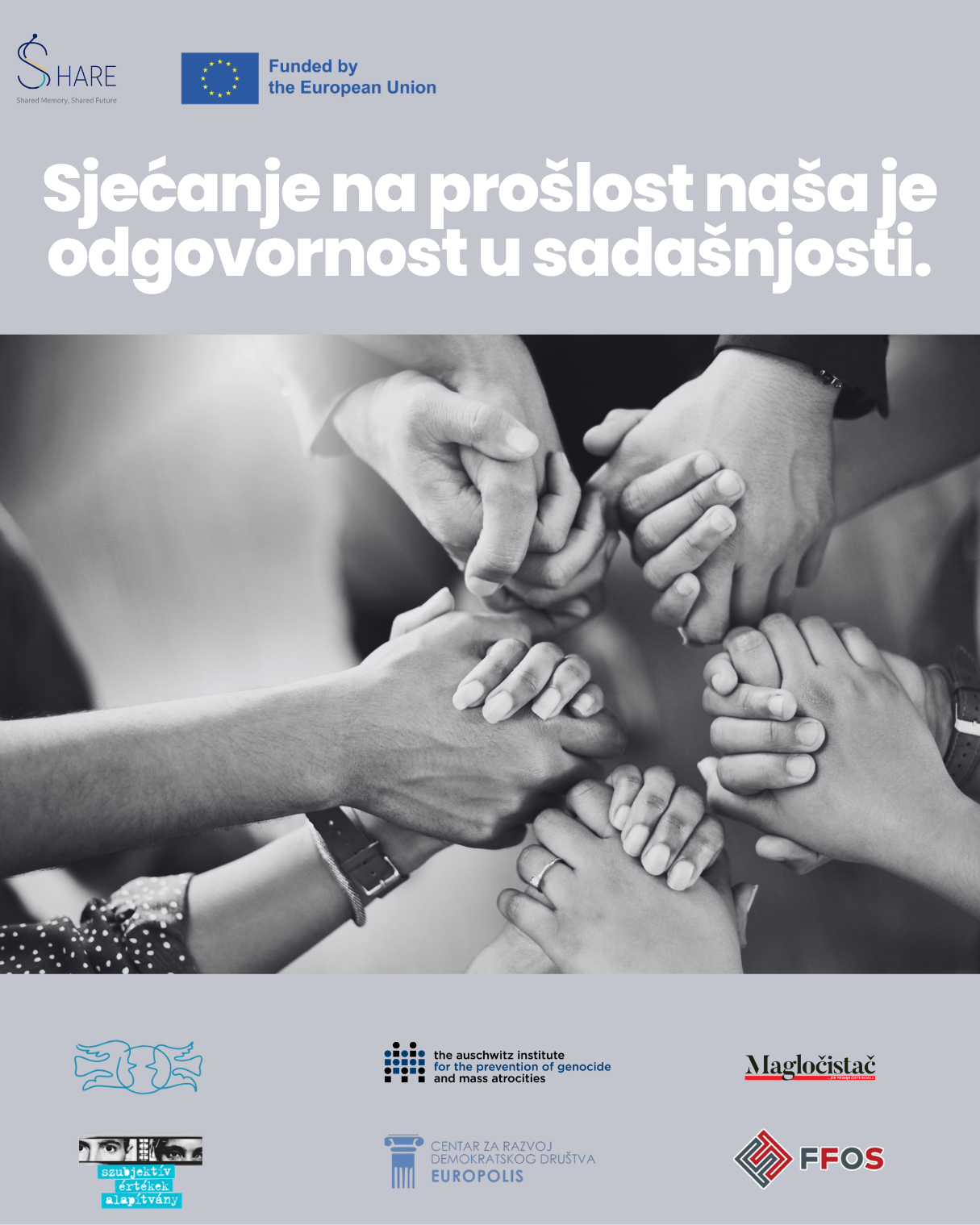
The antisemitic slogans and symbols used by some members of the Torcida supporters’ group in the streets of Split on 14 October 2026 remind us that antisemitism has not disappeared and that the fight against hatred, prejudice and intolerance must be part of our everyday lives.
The Holocaust teaches us where dehumanisation, exclusion and society’s silence in the face of hatred can lead. That is why the remembrance of millions of victims must not remain merely a part of the past that we commemorate on specific dates. It must be part of how we understand the present and the responsibility we bear for the future.
Preserving the memory of the Holocaust also means recognising antisemitism today. It means protecting historical facts from denial and distortion, and ensuring that younger generations understand how prejudice, propaganda and the normalisation of hatred can threaten human dignity and fundamental rights.
That is why education, dialogue and a culture of remembrance are more important than ever. They help us understand the past, think critically about the present and recognise our own responsibility in building a society where diversity is respected and antisemitism and all forms of hatred are met with clear and unequivocal condemnation.
Remembering the Holocaust is not only a duty to the victims. It is also an obligation to future generations: to pass on the truth, encourage critical thinking and empower them to stand up for human rights, equality and democracy.
Remembrance is not only about what we preserve from the past. It is also about what we choose to do today.
"Funded by the European Union. Views and opinions expressed are however those of the author(s) only and do not necessarily reflect those of the European Union or the European Education and Culture Executive Agency (EACEA). Neither the European Union nor the granting authority can be held responsible for them."
