Published 17.03.2026. | Tena Mur
We are grateful that, together with a delegation from the Balkans and at the invitation of our donors, the British Council, we participated in the study visit “Different Memories, Shared Futures: Towards Inclusive Memorialisation” in Northern Ireland and London.
This was not just a series of meetings and lectures, but a space for encountering people, stories, and the complex legacies of the past that continue to shape the present. Over the course of a week, we had the opportunity to better understand what it means to live with an “unfinished” history.
In Belfast, through conversations with experts and activists, we explored the legacy of the conflict known as The Troubles. It was particularly important to see how that past is spoken about today – cautiously, yet with a clear desire to build a shared future. The visit to the Ulster Museum further emphasised how important different narratives are and how memorialisation is never neutral.
Through meetings with organisations such as the Commission for Victims and Survivors, WAVE Trauma Centre, and Healing Through Remembering, we became familiar with concrete approaches to working with trauma and young people. Special emphasis was placed on the importance of safe spaces for dialogue and intergenerational learning.
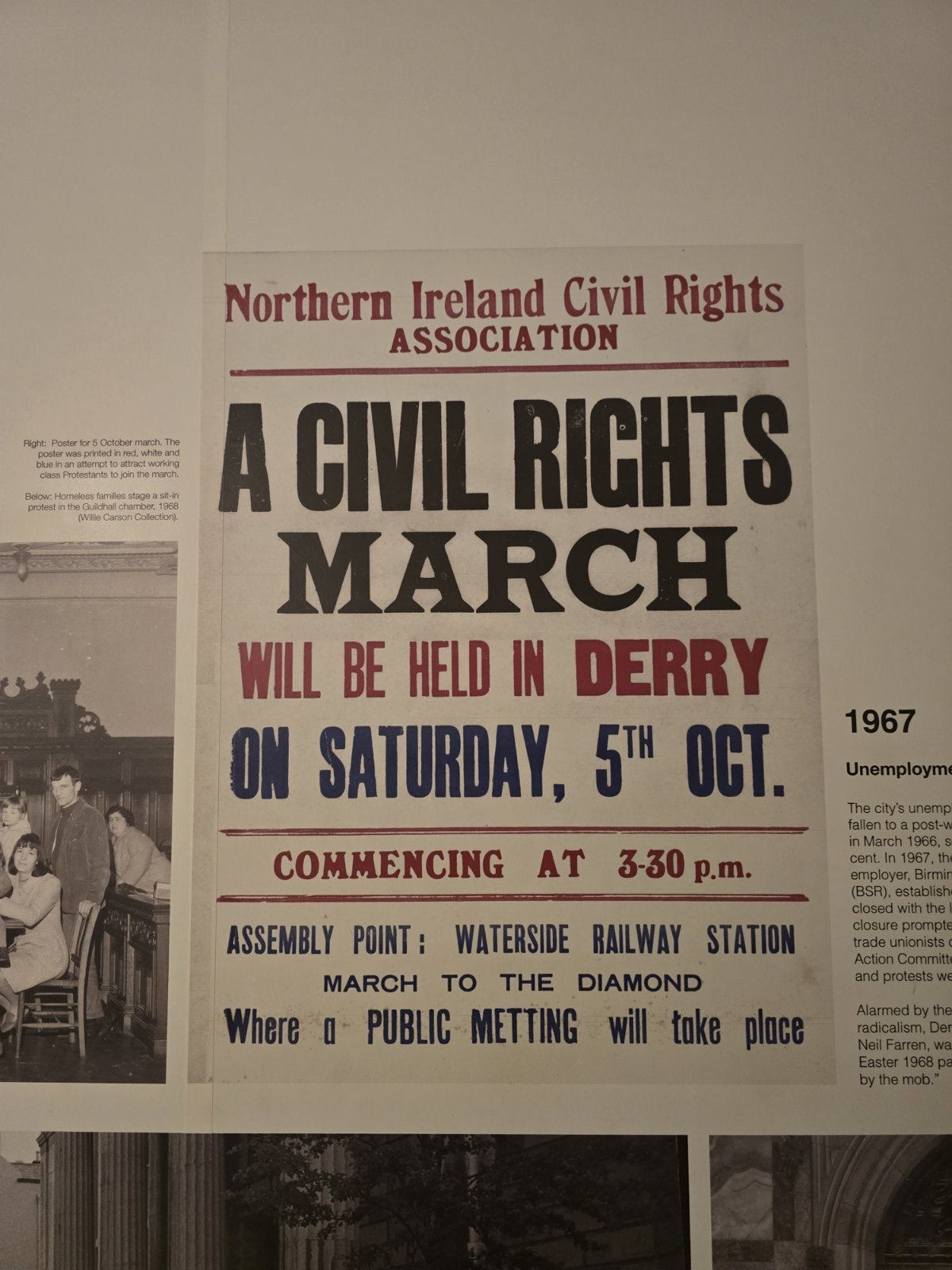
In Derry, we visited the Museum of Free Derry, where we gained a better understanding of the consequences of the conflict from a local perspective. The Here We Stand project was also presented, which shows how important it is to involve young people in shaping narratives about the past.
The second part of the programme in London opened up a broader, global perspective. At the Imperial War Museum, we discussed how museums today confront their own narratives and include previously neglected voices. The academic portion at King’s College London and the London School of Economics and Political Science further deepened our understanding of the relationship between memory, politics, and society.
This study visit did not offer simple answers – but that is precisely where its value lies. It opened up space for understanding, critical reflection, and empathy.
And perhaps most importantly: although memories are often divided, the future does not have to be.
