Published 08.12.2025. | Nina Sauerborn
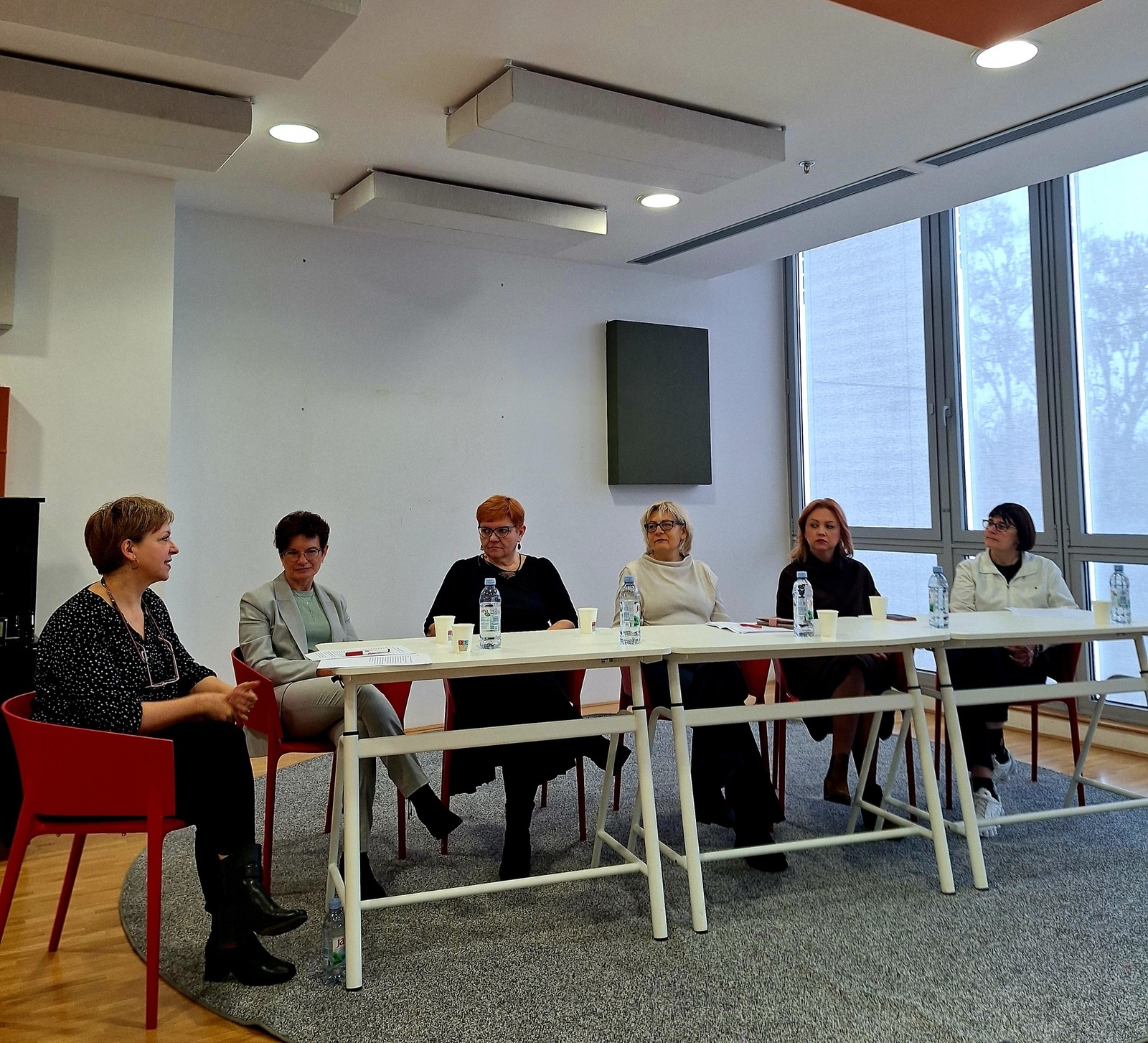
Dialogue forum held entitled "Behind the Front Lines: Invisible Heroines"
War is most often retold in a male voice – through uniforms, weapons, heroic narratives, and battles on the front line. Yet behind every frontline lie the untold stories of women: fighters, doctors, activists, mothers, neighbours, volunteers, refugees, bearers of burdens and keepers of life. These stories, so crucial for understanding war and building peace, are the ones most often silenced.
For this reason, the Centre for Peace, Nonviolence and Human Rights Osijek organized the dialogue forum “Behind the Front Line: Invisible Heroines”, with the aim of opening space for women’s perspectives — perspectives that are at once vulnerable and strong, traumatized and resilient, victimized yet central to peacebuilding.
The forum featured: Dr. Mirjana Semenić Rutko, Prof. Silvija Ručević, Lejla Šehić-Relić, Veselinka Kastratović and Martina Uglik.
Why was this forum necessary?
Women in war are not only victims. They are initiators of peace efforts, organizers of care and resistance, defenders, witnesses, and builders of social cohesion. Although their stories shape society just as deeply as frontline battles, they have — as the panelists highlighted — remained absent from official narratives, statistics, and history books.
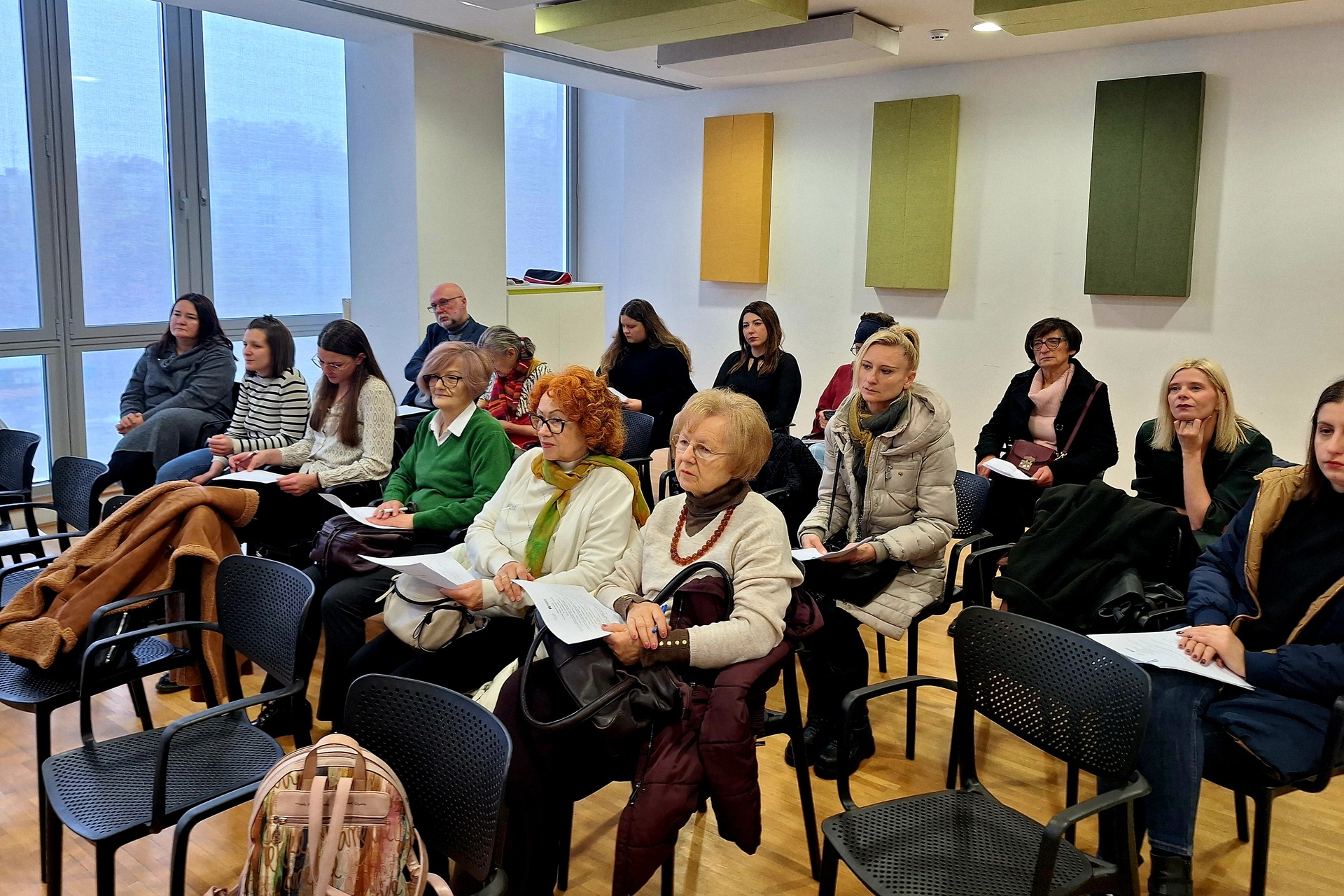
Prof. Silvija Ručević emphasized that, in research from the early 2000s to 2019, among tens of thousands of publications, only 58 addressed women volunteers in the military.
Women’s experience of war is still invisible, even within systems that should be capable of recognizing their needs:
– doctors rarely connect women’s symptoms with the consequences of war
– PTSD among women remains insufficiently researched
– retraumatization occurs every time the subject is raised, yet the topic is discussed far too rarely
Veselinka Kastratović pointed out that peace work often meant “having a target on your forehead.” Women peace activists were exposed to prejudice, threats, and hostility, while at the same time being expected to quietly and calmly absorb other people’s trauma.
Dr. Mirjana Semenić Rutko highlighted the physical consequences of trauma that are rarely mentioned, such as the cessation of menstruation under extreme wartime stress.
Meanwhile, Lejla Šehić-Relić, Executive Director of DKolektiv, reminded participants of the power and importance of women’s volunteer work — from supporting refugees to building local networks of solidarity.
Yet after the war, women continue to face:
– economic and legal barriers
– marginalization
– lack of involvement in decision-making processes
– societal silence around their experiences and contributions
Post-war reality is often harder than the frontline itself: women shoulder the burdens of family, care, and economic survival — without recognition, without systemic support, and without space for their own healing.
The forum concluded with a clear message from the panelists:
without women’s stories there is no truth about war, and without women’s knowledge and experience there can be no lasting peace.
To recognize women means to:
✔ record their history
✔ give them a voice in the public sphere
✔ ensure psychological and legal support
✔ include them in decision-making processes
✔ allow their experiences to become the foundation of a more just society
War is not only the struggle of men on the front line.
War is also the invisible frontline where women have carried the weight of entire communities for years.
It is time for us to finally see it.
The dialogue forum “Behind the Front Lines: Invisible Heroines” is part of a project of the same name, whose main goal is to promote public recognition, understanding, and acknowledgement of women’s wartime experiences — both civilian and military — through the collection, documentation, and presentation of their personal testimonies, thereby increasing the visibility of women’s perspectives in collective memory.
